
25 to 30 August. The World Water Week in Stockholm is an annual event for the globe’s water issues. Organized by the Stockholm International Water Institute (SIWI), and supported by the United Nations water programs, the purpose of the annual meeting is to bring the world’s attention to water-related challenges occurring in almost every part if the world. Water is so critical that its problems affect, and are affected by, all others – economy, poverty, population, waterborne diseases, famine, migration and violence.
Sunday 25 August
Inclusive capacity development in water forecasting and climate-change adaptation
- Opportunities around investing in rainfed irrigation across Africa – H.E. Josefa Leonel Correia Sacko, African Union Commission (tbc)
- Introductory exercise on the key challenges facing African rainfed agriculture – Katherine Madden, Process Facilitator, SIWI
- The impact of rainfed irrigation and green water management on farmers in different settings in Africa – TBC
- Presentation on the impact of the Billion Dollar Business Alliance for Rainwater Harvesting – Maimbo Malesu, Theme Leader, Water Management, ICRAF
- Presentation on the impact Drylands Development Programme – Assefa Tofu, DryDev Program Manager, Worldvision Ethiopia
Panel: What enablers will support the scale up improved rainfed agriculture / rainfed irrigation across Africa?
- Ines Gasmi, IWRM Coordinator, Water Youth Network
- Lisbeth Jespersen, Head of International Partnerships and Fundraising, IDH
- Nick Tandi, Senior Water Resources Management Specialist, World Bank (invited)
- Peter Vos, Global Water Sector Lead, Global Green Growth Institute (GGGI)
Wednesday 28 August
“Big data for all”, can it help improve agricultural productivity?
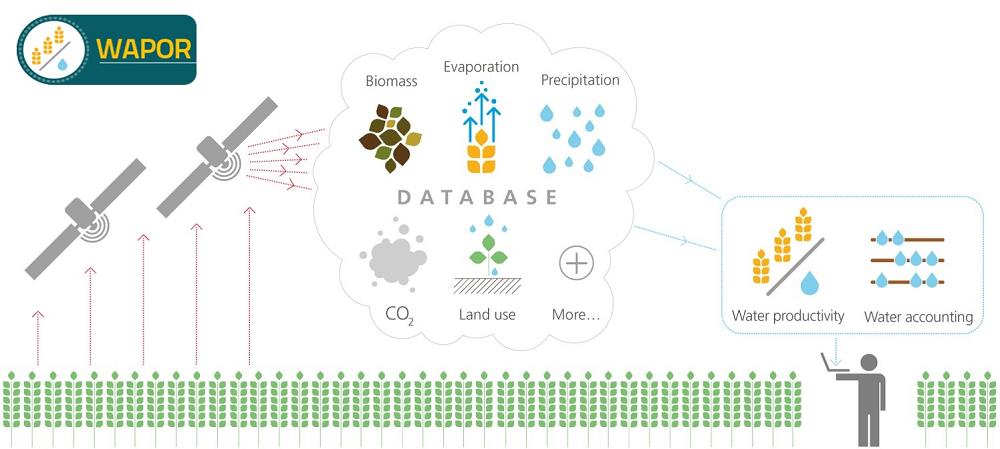
This event will discuss how innovative technologies can support inclusive and sustainable agriculture and benefit vulnerable groups. It will show practical applications based on free data and open source technologies to improve informed decision making for increased water and land productivity in agriculture both at field level and for policy-making.
- Remote sensing for monitoring water productivity: FAO WaPOR open access database – Jippe Hoogeveen, FAO
- Water productivity monitoring in arid areas – Atef Swelam, ICARDA
- Climate data to improve farmers’ resilience – Moussa Waongo, Agrhymet
Panel discussion on “Big data for improving agricultural productivity”
- Hesham Bekhit, Ministry of Water Resources and Irrigation, Egypt
- Aart van der Horst, Government of The Netherlands
- Eddy Moors, IHE-Delft
- Jennie Barron, Swedish University of Agricultural Sciences
Water in Sahel: humanitarian needs vs. lasting changes
French Water Partnership | Geneva Water Hub | Sahara and Sahel Observatory | Swiss Agency for Development and Cooperation
The session will present some key learnings from past and current initiatives in Sahel on how to reinforce protection of water services, how to find a balance between investing in security/institutional measures and basic service deployment.
H2O Maghreb – providing innovative training for young water professionals
The future of family farming: climate change impacts and responses
Agrhymet Regional Centre | Food and Agriculture Organization of the United Nations | Government of Niger | International Fund for Agricultural Development
The major effects of climate change in rural areas will be felt through changes in water supply, food security and agricultural incomes. This event will focus on the analysis of the impacts of climate change in small-scale family farming in West Africa and the potential responses to open up new opportunities for the rural poor.
- Observed Climate Trends and Climate Change Projections in West Africa – Moussa Waongo, Aghrymet Regional Center
- Impact of Climate Change on Crop Yields and Adaptation Needs in West Africa – Patricia Mejias-Moreno, Land and Water Officer, FAO
- Climate Change Adaptation Strategies in Niger – Moussa Amadou, Director, Rural infrastructure, Ministry of Agriculture and Livestock, Niger
- Atef Swelam, Senior scientist, Irrigation and Water Management, ICARDA
- Anton Earle, Director Africa Regional Centre, Stockholm International Water Institute (SIWI)
Innovation, Entrepreneurship, and Inclusion: Africa’s Farmer-led Irrigation Revolution
Alliance for a Green Revolution in Africa | Feed the Future Innovation Lab for Small Scale Irrigation of the Norman Borlaug Institute for International Agriculture and Development at Texas A & M University | International Water Management Institute | Robert B. Daugherty Water for Food Global Institute at the University of Nebraska | The World Bank Group
Farmer-led irrigation (FLI) has been transformative for many farmers in Africa’s agricultural development. A solid research evidence base contributed to a commitment from the AU, regional and national governments and development partners to invest in FLI. This event addresses the next step in the challenge – how to expand access, opportunity and benefit to more farmers, including those that are the most resource poor.
- Peter McCornick, Executive Director, Robert B. Daugherty Water for Food Global Institute, University of Nebraska
- Greg Browder, Lead, Water Security and Integrated Resource Management, World Bank
Case studies
- Analyzing business models for smallholder irrigation service provision in Rwanda – Vivian Nguyen, Caleb Milliken and Grace Mukarusagara, DWFI
- Piloting Farmer-led Irrigation in Uganda – Regassa Namara, Senior Economist, Water Global Practice, World Bank Group
- Integrated business models for farmer-led solar irrigation development in Ethiopia – Petra Schmitter, IWMI
- Irrigation in the renewal of agriculture in Messica, central Mozambique – Phil Woodhouse, Studying African Farmer-led Irrigation (SAFI), University of Manchester
- Socio-economic differentiation in Farmer-led Irrigation Development in Kahe, Tanzania – Chris de Bont, Studying African Farmer-led Irrigation (SAFI), Stockholm University
- Gender and water technologies: Water lifting for irrigation and multiple purposes in Ethiopia – Likimyelesh Nigussie, IWMI
Source: PAEPARD FEED