
15 -18 February 2017. Nuremberg. Biofach 2017.

the global population consuming organic produce.
Sourcing from Central and Eastern Europe – risks and benefits
15 February. This session presented and discussesed the latest developments, trends and the potentials of the Organic Sector within the CEE. General and in-depth information is shared at the level of specific countries – Hungary, the Ukraine, Slovakia, Czech Republic.
- Prof. Dr. Urs Niggli, Director, Research Institute of Organic Agriculture (FiBL), Switzerland
- Dr. Dóra Drexler, Ungarisches Forschungsinstitut für biologischen Landbau (ÖMKI), Hungary
- Dr. Toralf Richter, Berater Naturkostfachhandel, Research Institute of Organic Agriculture (FiBL), Switzerland
- Magdalena Lacko-Bartosova, Slovak University of Agriculture in Nitra, Slowakia
- Jan Gallas, Ministry of Agriculture of the Czech Republik
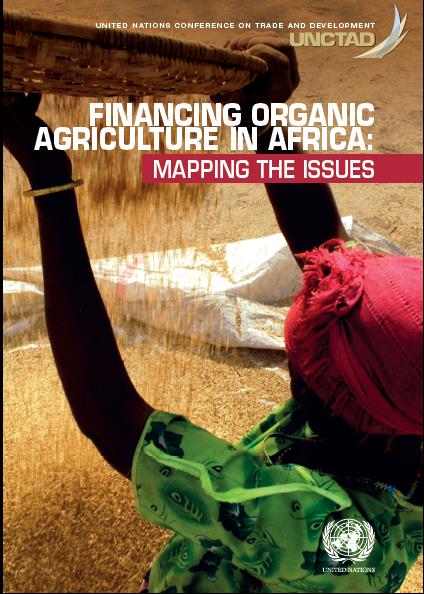 |
| UNCTAD 2016 Financing Organic Agriculture in Africa: Mapping the Issues, 10 pages “Research grants are perceived as one the least available funding instruments to support OA development.” |
17 February 2017. Nuremberg, Germany. Building on the vision and strategic action plan of TIPI
(the Technology Innovation Platform of IFOAM – Organics International), a workshop identified the research gaps in organic food and farming systems in the context of international cooperation. The Science Day was organized by the Research Institute of Organic Agriculture FiBL in collaboration with IFOAM EU.
- Hans-Jörg Lutzeyer, European Commission, DG Research & Innovation
- Annette Schneegans, European Commission, DG Agriculture and Rural Development
- Which thematic fields should be prioritized in different regions (continents) to collect evidence about the benefits and needs for improvement of organic food and farming Systems (100 questions to be addressed by novel organic food and farming systems)?
- Who should set these research priorities, and how (i.e., how much should research priorities and innovations be farmer-, policy-, market- or funder-driven)?
- How can the organic community and its constituents effectively advocate for organic food and farming Systems research?
“The World of Organic Agriculture”
Statistics and Emerging Trends 2017.
 Helga Willer and Julia Lernoud (Eds.)
Research Institute of Organic Agriculture (FiBL), Frick and IFOAM – Organics International, Bonn
Extract: Latest Developments in Organic agriculture in Africa (Jordan Gama) (pages 161-174)
- The African Organic Network (AfrONet)
- Strategic Plan (2015-2025) for the Ecological Organic Agriculture Initiative (EOAI) for Africa
- New UNCTAD study “Financing Organic Agriculture in Africa: Mapping the Issues”
- Outlook

AFRONET has been endorsed to be the continental alliance of Ecological Organic Agriculture (EOA) stakeholders in Africa. The meeting that endorsed was held on 1st May 2012 and attended by 42 partners across Africa. Represented by NOAM, PELUMs, PROPAC, IFOAM and Associations/Institutions from Africa and partners.
Further discussion was held at Biofach 2010 and the IFOAM/UNEP conference in Nairobi, 2011. Need for strategic Alliance of EOA actors in Africa are felt as a network for Organic Agriculture Research in Africa was launched during the organic conference in Kampala.
Related:
The Cotton made in Africa initiative has set itself the goal since 2005 to sustainably improve the living conditions of cotton farmers in Sub-Saharan Africa.
- African smallholders learn about efficient and environmentally friendly cultivation methods through agricultural training provided by our experts.
- At the same time, an international alliance of textile companies is established which purchase the Cotton made in Africa raw material and pay a licensing fee to use the seal.
- The proceeds from licensing fees, in following with the workings of a social business, are reinvested in the project regions of Sub-Saharan Africa.

Source: PAEPARD FEED