
- The Low Emission Development Strategies Global Partnership (LEDS GP) was founded in 2011 to facilitate peer learning, technical cooperation and information exchange to support the formation and implementation of low emission development strategies. It has a focus on support to developing countries and regions. Click to see the structure of the LEDS Global Partnership
- Through networking of peers and a bringing-together of support programs with live policy processes, LEDS GP helps to build the capability of practitioners and progress low emission development in a practical way.
- LEDS GP engages leaders from over 300 institutions across government agencies, technical institutes, international agencies, and NGOs. It operates through regional platforms in Africa, Asia, Europe and Eurasia, and Latin America and the Caribbean and has six technical global working groups and a global secretariat. Developing country leaders in each region set priorities for learning, collaboration, and advisory support delivered collectively through the Partnership.
- The Partnership’s work and collaboration is supported by the German Federal Ministry for the Environment, Nature Conservation and Nuclear Satety (BMU), the US State Department and US Agency for International Development (USAID), the European Commission, the Hewlett Foundation , the Inter-American Development Bank, the World Bank, and a range of other donors. The network has an innovative devolved and distributed leadership structure that places national needs at its heart.
Speakers Dr George Wamukoya AfLP Co-Chair, and Team Leader, Africa Group of Negotiators Experts Support (AGNES)
 Mr Stephen Muwaya
Mr Morton Mwanza
 Mr Kingsley Amoako
Ms Veronica Ndutu 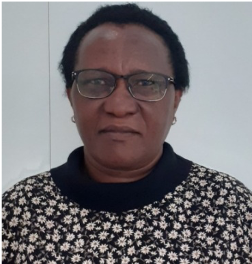
 Ms Lilian Kwamboka
Mr Abdullah Karim
Mr Abdullah Karim is a Research Associate with the AGNES, supporting the work stream on Mitigation, LEDS & NDCs. He holds a Bachelor’s Degree in Agribusiness (Climate Change and Food Security) and an MPhil degree in Agricultural Economics. Abdullah has collaborated in working on a number of projects related to Climate Change, the recent one being a British Academy funded project on Vulnerability to Extreme Weather Event in Cities: Implication for Infrastructure, Livelihood and Services.
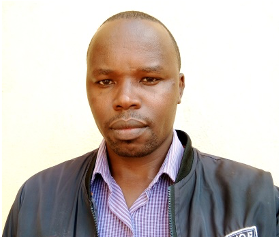 Erick Omollo
Erick works with AGNES as a Research Associate – Policy and Governance. He holds BSc degree in Range Management and MSc. degree in Range Resource Economics. He is also a Research Fellowship under the African Climate Change Leadership Program (AfriCLP) at the University of Nairobi, Kenya. Prior to joining AGNES, he worked as a Program Assistant in a Climate Change Governance (CCG) program in Kenya under the Democracy for the Development Alternative Inco. (DAI).
Related:
In the example below from Cameroon, cassava farmers were supported to apply agro-forestry, a nature based approach that builds ecosystem resilience to cultivate their cassava. They were also guided to pool their resources, and acquire decentralized clean energy solutions – solar driers to dry and preserve their cassava and a micro-hydro adapted to power cassava milling.
The Global Green Growth Institute Annual report 2019.
Source: PAEPARD FEED