

6 – 7 June 2016. Copenhagen. The 3GF 2016 Summit, has made a global commitment to advancing green transformation at speed and at scale. Hosted by the Government of Denmark, representatives from 3GF partner countries; China, Ethiopia, Kenya, The Republic of, Korea and Mexico attended the 3GF Summit along with representatives from new partner countries Chile and Vietnam .
The Summit also welcomed decision makers from 37 different countries across the public and private sectors along with civil society. Over 450 high level delegates attended the event including representatives from 68 private companies.
As we think about our food supply, how can new partnerships help increase efficiency working through such deeply embedded and existing supply chains? How can food waste be reduced at both the production and consumption ends of our food systems? How can we achieve scale in markets where smallholder farmers can play a significant role? See: Session note: Delivering Smarter Food Systems
- HE Mr Espen Lunde Larsen, Minister of Environment and Food, Denmark
- Khalid Bomba, CEO, Ethiopian Agricultural Transformation Agency, (ATA)
- Liz Goodwin, CEO, WRAP
- Michiel Kernkamp, CEO, Nestlé Nordic Region
- Toine Timmermans, Wageningen University

A Call to Action: An In Conversation on Enabling Solutions at Speed and Scale in Ethiopia
This session explored green growth in Ethiopia – the experience of climate solutions in the context of
mitigation and climate changes in the country. One of the key strategic priorities for the Ethiopian government has been the development of industrial parks to attract investment, to both build up infrastructure and create employment opportunities. According to the UNDP, it’s estimated that building the green economy in Ethiopia would require over US$150 billion over 20 years from 2011 to 2030. A green path of development would allow Ethiopia to tap into streams of climate finance as well as traditional investment, whilst providing future-proof jobs in emerging sectors.
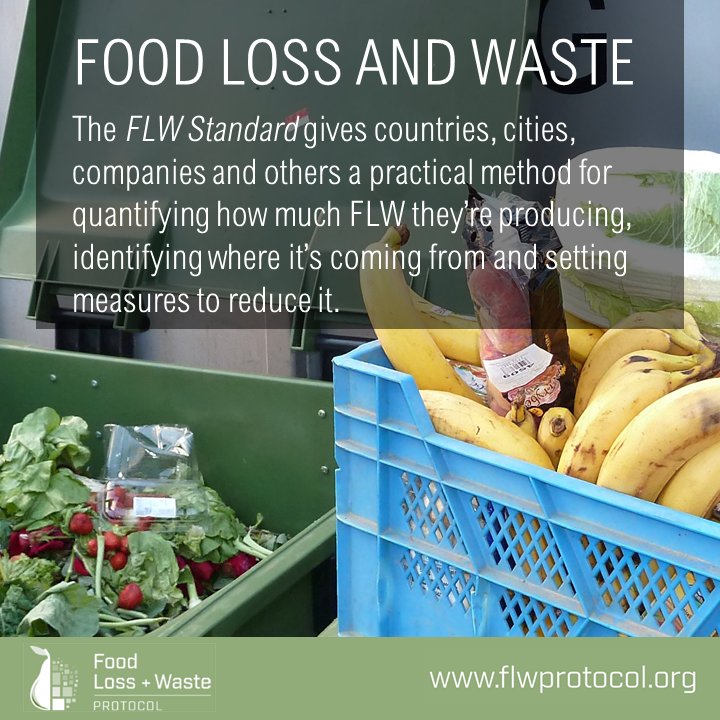 Launch of the 3GF Partnership “Food Loss and Waste Protocol”
standard for measuring food loss and waste in a consistent, credible and transparent manner.
Press RELEASE 06/06/2016: First-Ever Global Standard to Measure Food Loss and Waste Introduced by International Partnership
- HE Mr Kristian Jensen, Minister for Foreign Affairs, Denmark
- Liz Goodwin, CEO, WRAP
- Michiel Kernkamp, CEO, Nestlé Nordic Region
- Andrew Steer, President and CEO, World Resources Institute, (WRI)
- Ren Wang, Assistant Director General, Agriculture and Consumer Protection Department, Food and Agriculture Organization of the United Nations (FAO)

“This standard is a real breakthrough. For the first time, armed with the standard,
countries and companies will be able to quantify how much food is lost and wasted, where it occurs, and report on it in a highly credible and consistent manner. There’s simply no reason that so much food should be lost and wasted. Now, we have a powerful new tool that will help governments and businesses save money, protect resources and ensure more people get the food they need.” Andrew Steer, President and CEO, World Resources Institute. “

“WRAP’s work to help reduce household waste in the UK by 21 percent was only possible through our ground-breaking analysis to quantify how much and where it was wasted. Food waste is not confined by borders, so WRAP is delighted to have helped develop the Food Loss and Waste Standard. I am confident it will empower businesses, governments, and other organisations to take action on an international scale, an outcome that WRAP will strongly support.” Dr. Liz Goodwin, Chief Executive Officer, WRAP (The Waste and Resources Action Programme)

“Measuring the level of food waste in a structured way is critical for developing effective
strategies that focus on reducing food waste and monitoring progress at the business, national and EU level, as well as contributing to the achievement of SDG Target 12.3. The EU-FUSIONS’ Food Waste Framework and Quantification Manual is fully synchronized with the Food Loss and Waste Protocol’s FLW Standard. This enables users of the FUSIONS manual which are monitoring and reporting on food waste amounts and trends over time to be harmonized with the requirements of the global accounting and reporting standard.” Toine Timmermans, Project Coordinator for EU-FUSIONS


The Food Loss and Waste (FLW) Standard (160 pages)
- provides a set of global definitions and reporting requirements for companies, countries and others to consistently and credibly measure, report on and manage food loss and waste. The Standard will help governments and businesses save money, protect resources and ensure more people get the food they need.
- The FLW Standard was developed over the past three years by a partnership of leading international organizations, led by the World Resources Group (WRI). More than 200 external stakeholders representing companies, national governments, intergovernmental organizations, non-governmental organizations, and academic institutions from around the world provided feedback on the Standard.
- An estimated one-third of all food is lost or wasted worldwide as it moves from where it is produced to where it is eaten, even as more than 800 million people are undernourished.
- Food loss and waste globally costs up to US$940 billion per year.
- Food loss and waste generates about 8 percent of global greenhouse gas emissions. If it were a country, food loss and waste would be the third-largest greenhouse gas emitter behind China and the United States.
Resources:
The new FLW Protocol website, where you can access the Standard: www.FLWProtocol.org
A short 3GF film on food loss and waste and the Standard:
Interview with Vimal Shah, Chairman, Kenya Private Sector Alliance / Bidco Oil Refineries. Why is green growth important for the African region and how can public private partnerships drive green growth?
Green and growth must go together. Without green, growth cannot be sustainable and green cannot thrive without growth. A rapid, large-sale industrial transition is needed if global economic growth is to continue while reducing greenhouse gas emissions, adapting societies to climate change and promoting a sustainable use of resources.

Source: PAEPARD FEED